Table of Contents
A fence is more than a boundary—it’s part of your home’s first impression and security. But San Antonio’s intense sun, humidity, and seasonal storms can shorten its lifespan if it’s not properly cared for.
At Comal Fence, we’ve spent over 30 years helping homeowners protect their fences from Texas weather. Whether you have a wood, metal, or vinyl fence, these practical maintenance tips will help you extend its life, prevent costly repairs, and keep your property looking great year-round.
Understanding San Antonio’s Climate Impact
San Antonio’s weather can be tough on fences:
☀️ UV exposure fades paint and weakens materials.
💨 High winds and storms loosen posts and panels.
💧 Moisture and humidity promote rot or rust.
🌳 Tree debris and yard growth trap moisture and insects.
The key is routine maintenance—catching small problems before they become expensive replacements.
1. Inspect Your Fence Regularly
Walk your fence line at least twice a year—preferably in early spring and late fall. Look for:
Leaning posts or sagging sections.
Cracked or splintered boards.
Rust spots on metal panels.
Loose nails, screws, or hinges.
Early repairs can add years to your fence’s lifespan. For example, tightening fasteners or replacing one warped board prevents structural shifting that spreads damage.
2. Keep Vegetation Trimmed
Overgrown plants and vines may look pretty, but they trap moisture and invite pests.
Best practices:
Keep at least 6 inches of clearance between plants and the fence.
Avoid letting sprinkler systems soak the base of wooden fences.
Remove debris buildup after storms.
This simple step prevents rot, mildew, and soil erosion around posts.
3. Clean and Wash Your Fence
A yearly cleaning not only improves curb appeal but also helps you spot damage early.
For Wood Fences:
Use a mix of mild detergent and water or a special wood cleaner.
Apply with a brush or low-pressure washer.
Rinse thoroughly and allow to dry for 24–48 hours before sealing.
For Metal Fences:
Wipe with soap and water to remove grime.
Treat minor rust spots with sandpaper and touch-up paint.
For Vinyl Fences:
Spray with a hose or mild vinegar solution.
Avoid harsh chemicals that can dull the surface.
📌 See our related article: Flooded Yard? Essential Steps to Inspect and Protect Your Fence
4. Stain, Seal, or Paint Every Few Years
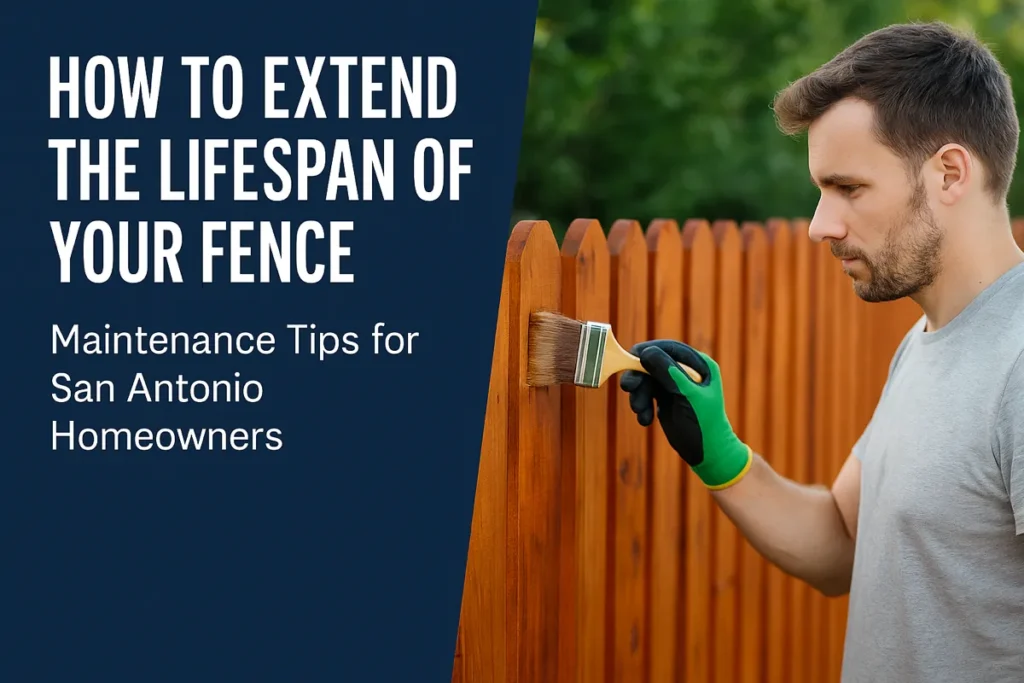
Wood fences in San Antonio need protection from both UV rays and humidity.
Apply a high-quality exterior stain or sealant every 2–3 years.
Choose oil-based products for deeper wood penetration.
Always clean and dry the fence before applying sealant.
For metal fences, use powder coating or rust-resistant paint to prevent oxidation and fading.
Learn more about your options in our Wood Fencing Services page.
5. Check Your Posts and Foundations
A fence is only as strong as its posts. In areas with clay soil, shifting or drainage can loosen foundations.
Pro tip:
After heavy rain, walk along your fence and gently shake each post. If it wobbles, reinforce it immediately with gravel or quick-set concrete.
This prevents the “domino effect” of leaning sections that can cause entire panels to fail.
6. Protect Against Rust and Corrosion
Metal fences—especially wrought iron or steel—are strong but can rust if neglected.
To prevent corrosion:
Inspect joints and welded areas regularly.
Use a rust converter on small problem spots.
Touch up with anti-corrosive paint once per year.
When maintained properly, a metal fence can last 40–50 years in Texas conditions.
Learn more about modern options in our post:
7. Ensure Proper Drainage
Standing water is a fence’s worst enemy. Poor drainage accelerates rot, rust, and soil erosion.
Fix it fast:
Regrade soil to slope away from your fence line.
Install gravel or French drains where water collects.
Avoid mulching directly against fence posts.
8. Schedule Professional Maintenance
Even with consistent upkeep, some issues require a professional eye.
At Comal Fence, we can:
Re-secure leaning posts.
Replace damaged pickets or panels.
Apply protective coatings.
Inspect for hidden rot or corrosion.
Regular professional maintenance ensures your fence stays safe, stable, and attractive—no matter what San Antonio weather brings.
Fence Material Lifespan Comparison
| Material | Average Lifespan | Maintenance Level | Key Tip for Longevity |
|---|---|---|---|
| Cedar / Redwood (Wood) | 15–20 years | Medium–High | Stain or seal every 2–3 years |
| Pine (Treated Wood) | 10–15 years | High | Avoid ground contact; apply sealant |
| Vinyl | 25–30 years | Low | Rinse yearly with mild detergent |
| Aluminum / Steel | 30–50 years | Low | Touch up paint on scratches |
Conclusion
San Antonio’s unique mix of sun, humidity, and storms can wear down any fence—but with the right maintenance plan, your fence can last decades longer.
At Comal Fence, our team provides expert installation, repair, and guidance for homeowners across Bexar, Comal, and surrounding counties. Whether you’re maintaining a cedar fence or upgrading to steel, we’ll help you get the most value from your investment.
📞 Call (210) 686-3932 or request a free estimate today to keep your fence strong, beautiful, and built to last.